community
What Officers Are Really Asking For When it Comes to Burnout Support & Why Most Data Systems Still Miss It
- TL;DR
- Why Do Officers Say Burnout Support Is Missing, Even When Systems Exist?
- What Everyday Police Interactions Are Missing From Policing Data?
- Why Feedback and New Technology Are Often Met With Skepticism in Policing
- Why “Early Intervention” Often Feels Late to Officers
- What Body Cameras Taught Us About Visibility and Support
Signup for Updates
Share
TL;DR
- Most policing data only activates around complaints, force, or policy issues, the moments that already carry risk and scrutiny.
- As Eric Tung put it on Blue Grit Radio, officers spend most of their careers in calls that never make a report, yet those are the interactions that shape how the public actually experiences policing.
- When only negative or high-risk moments generate data, everyday performance stays invisible, even though that’s where stress, tone drift, and burnout usually start.
- Officers don’t resist feedback itself; they resist feedback that only shows up after something goes wrong. Without earlier signals, “early intervention” feels anything but early.
- Post-contact feedback captures the middle ground Eric described, routine, human interactions, turning support into something officers recognize and leaders can act on.
Table of Contents
- Why Do Officers Say Burnout Support Is Missing, Even When Systems Exist?
- What Everyday Police Interactions Are Missing From Policing Data?
- Why Feedback and New Technology Are Often Met With Skepticism in Policing
- Why “Early Intervention” Often Feels Late to Officers
- What Body Cameras Taught Us About Visibility and Support
We’ve always believed in the power of honest conversation. Heck, that’s how we got our start; at a backyard BBQ, listening to officers talk candidly about the job.
They were swapping stories about being off the street for training, what they were learning, and how excited they were to bring those tools back into the field. Showing off a genuine pride in getting better at the work and serving people well.
Those kinds of conversations have stayed at the center of everything we do. Over time, they’ve shown us how much of policing happens in moments that never make it into a report, how many hours of dedication we don’t hear about in the civilian world.
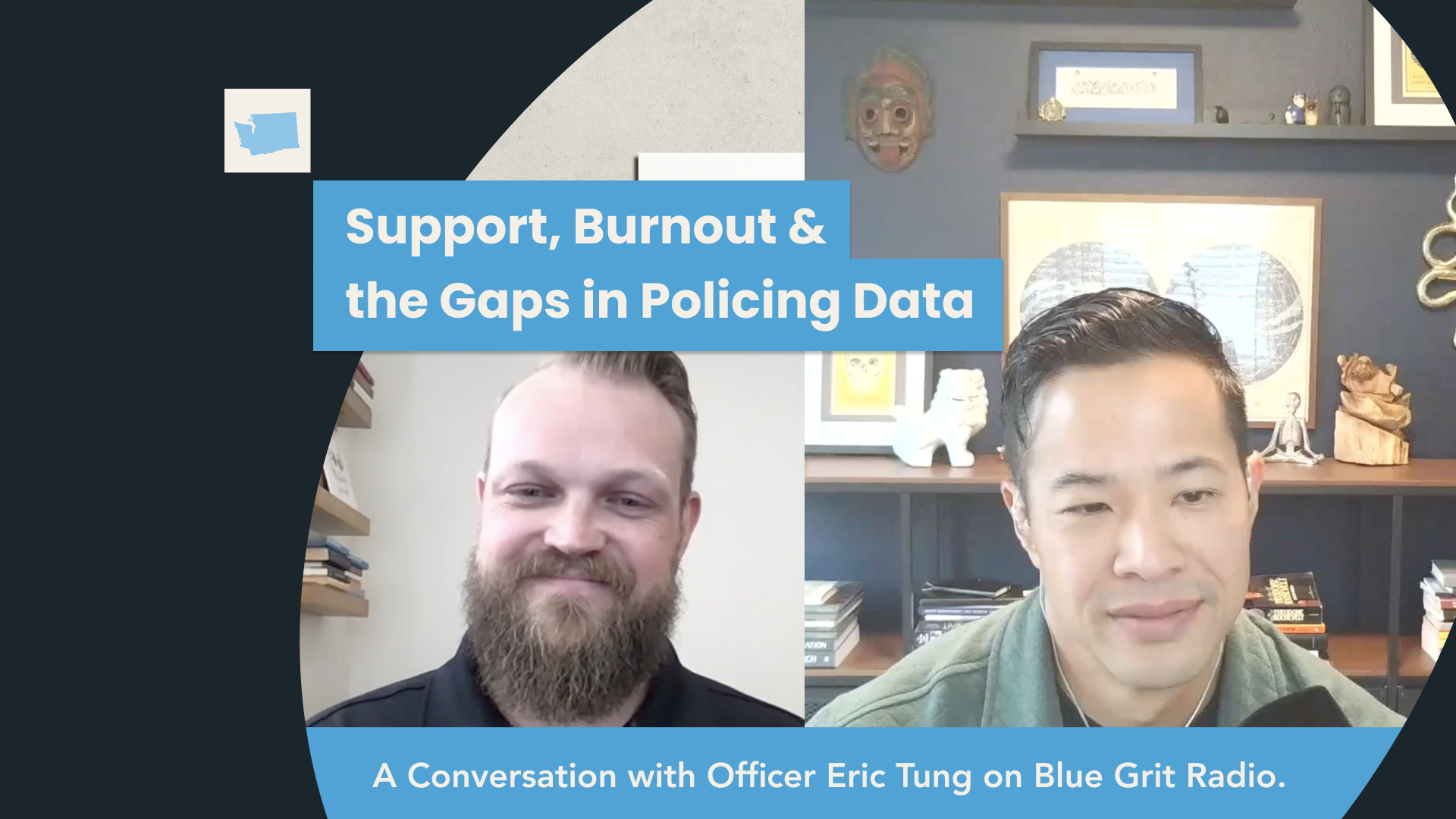
That’s why sitting down with Eric Tung on his podcast, Blue Grit Radio, and our founder, Scott Lowry, felt so important. The conversation picked up right where those early talks left off, burnout, community expectations, and the growing gap between what officers experience day to day and what most systems actually capture.
We pulled out the moments from that conversation that stuck with us, and are passing them along to you here.
Why Do Officers Say Burnout Support Is Missing, Even When Systems Exist?
🎧 Listen in on this part of the conversation
The conversation started with a simple question: what do officers actually mean when they say they want more support?
One of the first things Eric surfaced is that “support” has become a shorthand for something much bigger than policies, wellness resources, or formal check-ins. When officers talk about support, they’re talking about whether anyone really understands what the job asks of them, day after day, call after call.
That support shows up in two places.
Internally, it’s about leadership, morale, and whether officers feel backed before something goes wrong.
Externally, it’s about how the community sees them, talks about them, and reacts to the work they do in moments that never make headlines.
When either side feels thin, burnout isn’t far behind. The challenge is that most systems are built to respond to outcomes, not experiences.
They surface problems after stress has already compounded, after patience has worn down, after tone has slipped, after frustration has settled in. From the officer’s perspective, that can make support feel conditional: visible when something breaks, absent when things are simply hard.
What Everyday Police Interactions Are Missing From Policing Data?
🎧 Listen in on this part of the conversation
Eric made a simple comparison that landed immediately: police departments don’t get reviewed the way restaurants do.
If someone goes out of their way to leave public feedback about law enforcement, something usually didn’t go well. People don’t hunt down a department website or complaint form just to say an officer handled a tough situation with patience, or took extra time to explain what was happening.
That’s the heart of what’s missing from most policing data. That’s also why feedback has historically been met with skepticism inside policing. When Know Your Force first entered the space, many officers heard the word “feedback” and assumed it was just another form of surveillance, another way to watch, score, or discipline them after the fact.
Hearing Eric talk through this openly is important, because it puts that reaction in context. Officers aren’t resistant to being evaluated; they’re resistant to systems that only show up when something goes wrong. When feedback feels one-sided or detached from everyday reality, it reinforces the idea that it exists to catch mistakes, not support the work.
That skepticism makes sense, especially when you look at how other technologies were received at first.
Why Feedback and New Technology Are Often Met With Skepticism in Policing
🎧 Listen in on this part of the conversation
Eric drew a clear parallel to body cameras, and it’s one most officers recognize immediately.
When body cams were first introduced, the reaction wasn’t subtle. A lot of officers pushed back hard. The concern wasn’t about transparency in theory; it was about surveillance in practice. Being watched, second-guessed, or disciplined based on clips pulled out of context. For many, it felt like another tool designed to catch mistakes rather than understand the job.
But over time, that perception shifted.
As officers started working with body cameras day to day, something unexpected happened. The footage didn’t just document incidents, it DID provide that missing context. It showed what officers were responding to, what they were saying, and why decisions were made in the moment. In many cases, it protected officers by filling in gaps that written reports or third-party accounts never could. Even more importantly it gave a clear timeline to their full day, the string of vastly varying calls that require a range of reactions and skills from them each day
The technology didn’t change, but the relationship to it did.
Once officers saw that body cameras could work for them, not just monitor them, the resistance softened. What initially felt like surveillance became, in many departments, a form of support. Eric’s point was simple but important: the initial fear wasn’t irrational. It was rooted in experience. And the same dynamic shows up anytime a new feedback or data system enters policing. When officers don’t see how information will be used, or only experience it when something goes wrong, skepticism is a natural response.
That history matters. It explains why words like “feedback” can still raise flags, and why trust has to be built through how data is applied, not just how it’s collected.
Why “Early Intervention” Often Feels Late to Officers
🎧 Listen in on this part of the conversation
This is where the conversation shifted from why things feel broken to what actually changes when feedback shows up earlier. Eric and Scott, our founder, talked about the simple but often overlooked problem with most feedback systems: the barrier to entry is too high.
If someone has to search for a website, fill out a long form, or decide whether something is “worth” a formal complaint, most everyday interactions will never be reflected anywhere. Not because they don’t matter, but because the process doesn’t match the moment. Earlier, everyday feedback works differently because it shows up close to the interaction itself. When feedback is tied to a specific encounter it’s easy to share.
What changes isn’t just the volume of data. It’s the nature of the conversation.
Instead of feedback arriving weeks or months later as a surprise, it becomes something officers and leaders can look at in context. Patterns show up sooner. Small issues stay small. Positive interactions don’t disappear. And conversations shift from “why did this happen?” to “what are we seeing, and how can we support this earlier?”
Eric made an important point here: when feedback feels immediate and proportional, it stops feeling like surveillance. It starts to feel like information, something that helps officers adjust, reflect, and stay grounded in the work before frustration or burnout has a chance to compound. That timing matters. Because when feedback arrives while the work is still fresh, it has a chance to support the officer, not just evaluate them.
What Body Cameras Taught Us About Visibility and Support
The body camera comparison matters because it shows how change in policing usually unfolds.
Body cameras didn’t solve burnout or rebuild trust on their own. What they did was add context where there used to be gaps. They made more of the job visible, especially in moments where written reports or third-party accounts fell short. Over time, that visibility shifted how incidents were understood, both inside departments and outside of them.
Post-contact feedback follows a similar logic, but earlier in the timeline.
Where body cameras help explain what happens during critical incidents, post-contact feedback captures what happens across the middle of the job, the everyday interactions Eric kept returning to. The calls that resolve without escalation. The conversations that never turn into reports. The judgment, restraint, and communication that shape public experience but rarely show up in formal data. This isn’t about adding another layer of oversight. It’s about filling in what’s missing. When feedback only appears at the point of failure, support will always feel reactive. When it shows up alongside routine work, it becomes context. Patterns surface sooner. Positive interactions don’t disappear. Small issues are easier to address before they harden into larger ones.
What came through clearly in Eric’s perspective is that officers aren’t pushing back on feedback itself. They’re pushing back on systems that only recognize their work when something goes wrong. Support feels different when information reflects the full range of the job, not just its worst moments. Burnout doesn’t usually start with a major incident. It builds gradually, through repetition, pressure, and the accumulation of unseen effort. The closer our data gets to those everyday moments, the better chance there is to understand what officers are carrying, and why support so often feels late.
That understanding is where more meaningful conversations, inside departments and with the public, can actually begin.
“I’m genuinely grateful for this conversation and for the opportunity to sit with it more deeply here with you. Eric already puts a lot on the line just by doing the job, and that alone deserves real respect. The fact that he also makes time for conversations like this, helping people better understand policing and supporting officers along the way, says a lot about who he is. My hope is that this helps more people see the position officers are often in, and recognize that the systems around them do not always make it easy to build the trust and connection their communities expect.” - Scott Lowry | Founder, Know Your Force